
Originally published by: PubMed
Written by: Ashley F. Jennings, Molly F. Steinhoff, Rebecca Tillman, Joshua J. Jackson, Anthony Pinto, Kirsten E. Gilbert
Abstract
Personality has repeatedly shown to be evident and reliably measured in childhood. However, studying obsessive-compulsive personality (OCP) traits cohesively in youth has been limited given the lack of developmentally-modified assessments for the presentation. The current manuscript adapted an adult measure of OCP traits, Pathological Obsessive-Compulsive Personality Scale (POPS), into a parent-report child measure (POPS-C). Study one explored factor structure and preliminary external validity with various clinical measures. Study two used a larger, independent sample to examine confirmatory factor analyses and external validity. POPS-C demonstrated good psychometric properties, with a bifactor model as best fit. The validation of a measure of OCP traits in children aged 4–9 years demonstrates OCP traits are evident and measurable in childhood. Strong associations between POPS-C scores and negative affectivity, executive functioning deficits, elevated delay of gratification, poor emotion regulation and psychiatric symptoms highlight the need for early assessment and intervention for youth with OCP traits.
Associations between personality and psychopathology are well-established in adulthood (Tackett & Mullins-Sweatt, 2021), yet personality does not suddenly crystalize and impact mental well-being when an individual turns 18 years old. Relationships between personality and psychopathology emerge early in development, prompting calls to consider these relationships through a developmental lens (e.g., Gilbert et al., 2019; Wilson & Olison, 2021). Personality has repeatedly been shown to be evident, and reliably measured, in childhood (Shiner et al., 2021). Its roots are apparent as early as preschool age, and continue to form over the course of childhood and adolescence (Shiner & DeYoung, 2013; Tackett et al., 2016). Childhood involves rapid, dynamic development with significant changes in emotions, motor skills, cognition, and language (Bloom & Lahey, 1978; Denham, 1998; Malina, 2004), making personality structures challenging to measure in this stage of life. However, there is growing evidence demonstrating similarities between adult and childhood personality structures (Gilbert et al., 2021; Verbeke et al., 2017). For example, Herzhoff et al. (2017) highlight that the well-established Five Factor Model (FFM; McCrae & John, 1992) traits of personality are not only evident in early childhood, but also have predictive validity for later adulthood personality traits. Assessment of childhood personality traits have continued to be evaluated in research and clinical contexts, and several, well-established measures have been developed to attempt to capture the dynamic, complex presentations in children (Rothbart et al., 2001).
Early Childhood Obsessive-Compulsive Personality (OCP) Traits
Although the literature supporting personality structure in childhood is established, previous research has only begun to consider how adult personality disorder structures and maladaptive personality traits emerge earlier in life to study developmental onset and progression (Geselowitz et al., 2021). This is imperative to better identify individuals who may be at-risk for current and future personality pathology.
Research has started to consider the developmental presentations of obsessive-Compulsive Personality Disorder (OCPD), a chronic mental health condition characterized by maladaptive perfectionism, a need for control over one’s environment, and preoccupation with order and details (American Psychiatric Association, 2022). Its estimated global prevalence is 6.5% (Clemente et al., 2022), with elevated rates of OCPD found in obsessive compulsive disorder (OCD) samples (Pinto et al., 2011), anorexia nervosa (Laczkovics et al., 2023), and major depression (Schiavone et al., 2004). Key cognitive and behavioral associations with OCPD include indecisiveness or procrastination, difficulty with change, challenges with emotional expressivity and relating to emotions in others, and anger outbursts related to perceived threat over one’s control (Mike et al., 2018; Pinto et al., 2022). Another key distinguishing feature of OCPD is an increased capacity to delay reward (Pinto et al., 2014) which may be a marker of excessive self-control in this population. As with most personality disorders, OCPD is typically diagnosed in adulthood, however research has demonstrated related presentations or aspects of obsessive-compulsive personality (OCP) traits present in childhood (Melero et al., 2020; Park et al., 2016) that have been linked to future psychopathology (Giles et al., 2022).
Perfectionism is a key facet of OCPD and has received much empirical attention in childhood, demonstrating concurrent and longitudinal associations with increased disordered eating symptoms, psychopathology, and impaired interpersonal functioning (Livet et al., 2023; Melero et al., 2020). Specific childhood OCP traits of maladaptive perfectionism and rigidity have also been found to have significant associations with eating disorders, obsessive-compulsive tendencies, and OCPD in adulthood (Livet et al., 2023; Marzola et al., 2019; Park et al., 2016; Pinto et al., 2015). Clustering of OCP-related traits, such as maladaptive perfectionism and rigidity, the cumulation of which have been called ‘overcontrolled’ tendencies, have been associated with early internalizing, anxiety, and obsessive-compulsive symptoms as well as poor peer relations, including increased likelihood of being bullied in early childhood (Gilbert et al., 2019., 2020, 2022). Moreover, early childhood measures of error sensitivity are predictive of future anxiety disorder symptoms (Chong & Meyer, 2019). As such, facets of the OCPD presentation indicate associations with psychiatric and interpersonal problems quite early in development.
Assessment of Early Childhood OCP Traits
OCPD has been shown to be a multidimensional construct that can’t be parsed into or characterized by general individual traits (Mike et al., 2018), and studying OCP traits cohesively in youth has been limited in the field given the lack of developmentally modified assessments tapping the overall presentation of OCPD. Gilbert et al. (2019) created a screener to assess overcontrolled personality traits in youth as it relates to self-control and perfectionism (i.e., Overcontrol in Youth Checklist). While this screener assesses some overlap with personality characteristics of OCP, it does not provide a comprehensive assessment of all facets of this personality disorder. Other assessments similarly assess only one facet of OCP traits in children, including multiple childhood perfectionism or rigidity questionnaires (Flett et al., 2016; Sametağlu et al., 2022). Other measures attempting to capture childhood OCP traits were developed using retrospective self-report measures in adults (Marzola et al., 2019; Southgate et al., 2008), later adapted to parent-report measures for youth samples (Park et al., 2016). Together, past measures have either had a narrow scope that neglects some facets of OCPD (i.e., reluctance to delegate; difficulty with change) while other measures are limited by their retrospective report, binary measurement (i.e., yes/no responses), and lack a dimensional developmental modification.
In adults, there are various assessments of OCPD, one of which is the Pathological Obsessive-Compulsive Personality Scale (POPS; Pinto et al., 2011; Sadri et al., 2018). The POPS is a 49-item self-report measure of maladaptive OCP traits and severity rated on a six-point Likert scale ranging from 1 (strongly disagree) to 6 (strongly agree). The scale consists of five specific trait factors (rigidity, emotional overcontrol, maladaptive perfectionism, difficulty with change, and reluctance to delegate) and an overall factor/total score (based on all items) that represents obsessive compulsive personality pathology on a continuum of increasing severity and dysfunction, with higher scores indicating greater OCPD symptomology. Although other valid and reliable measures of OCPD in adults exist, most prominently, the Five Factor Obsessive Compulsive Inventory (FFOCI; Samuel et al., 2012), the POPS was chosen for several reasons. First, the POPS includes a severity score (i.e., total score) that serves as an index of overall severity and dysfunction of OCPD traits, which is clinically useful to characterize patients and measure treatment outcome. Second, the POPS has fewer factors (five traits rather than twelve) that capture more general dimensions of OCPD that might be more likely to manifest in earlier development (e.g., the FFOCI includes workaholism, perfectionism and fastidiousness that may not be as apparent or relevant in childhood and may be subsumed under a broader characteristic of perfectionism earlier in development rather than emerge as separate scales). As such, given the clinical utility of an overall indicator of OCP traits and developmental considerations of how OCP traits may manifest in early childhood, we chose to developmentally adapt the POPS over the FFOCI.
The Current Study
The current project aimed to better understand a developmental presentation of OCPD by adapting a self-report, adult measure of OCP traits into a parent-reported child measure of OCP traits. We chose a parent-report format because of the ease of administration and the ability to assess multiple domains of child personality and psychopathology observable by parents in varied settings (Nauta et al., 2004). We followed Whiteside et al. (2013)’s suggested stages of scale development: 1) item generation/adaptation and preliminary analyses to remove weaker items and; 2) examine reliability and validity of items in a community sample. In Study 1, we first consulted with experts and authors in the field to developmentally adapt items. Second, an exploratory factor analysis (EFA) was conducted to establish subscales and remove any weak scale items. Finally, given personality development is complicated by biological, psychological, and sociocontextual systems of functioning impacting adaptive and maladaptive development along with risk and protective factors, we examined external and discriminant validity of the adapted scale with temperament, delay of gratification, executive functioning, emotion regulation and psychopathology, including both narrow (e.g., diagnostic symptom scales) and broad (e.g., internalizing and externalizing) measures of psychopathology. In Study 2 using a larger independent sample, we modeled a general OCP trait factor and specific OCP trait dimensions using a bifactor confirmatory factor analysis (CFA), similar to the adult POPS (Sadri et al. 2018). We then examined external and discriminant validity utilizing the same measures of temperament, executive functioning, emotion regulation and psychopathology for both the total POPS-C scores and individual factors. The goal of the current paper is to create and provide preliminary validation of a new measure that taps into early emerging developmental presentations of OCPD in relation to psychopathology in school-age children.
Study 1 Method
Participants
See Table 1 for demographic and clinical diagnostic information about the sample at the Visit 2 timepoint of a prior study, when current measures were administered. The age range of the participants in the current sample at Visit 2 was 6.95 to 9.73 years old. For baseline (Visit 1) study recruitment, community children between the ages of five and six years old were recruited both widely as well as oversampling for overcontrolled tendencies (with recruitment materials targeted to children who are “perfectionistic, shy and/or self-critical.”) Of note, overcontrolled tendencies theoretically overlap with OCP symptoms and so children elevated on OCP traits were inherently targeted. Participants were recruited from social media parent groups, online and in-person flyering, research registries and informational talks about child anxiety at local schools and child anxiety clinics. Exclusion criteria included Autism Spectrum Disorder, current psychotropic medication use (to include a more community-based sample given psychotropic medication use is not common in 5–6-year olds), chronic medical disorder, neurological disorder, and cognitive, speech or language delays or learning disabilities. One hundred twenty-six caregiver-child dyads completed an in-person baseline session (see Gilbert et al., 2022 for further details on the baseline assessment) and then, approximately two years later, 101 caregivers and children completed an online or in-person follow-up session. This follow-up assessment was done between 2020–2022 and so, severity of COVID waves dictated whether the session was online or in person. The follow-up session included parent questionnaires and clinical interview and child EEG and behavioral tasks. Mean days from baseline to Visit 2 was 793 (SD = 101) and children who completed (M = 3.10, SD = 1.08) versus did not complete (M = 1.98, SD = 1.54) the Visit 2 session differed on the socioeconomic indicator of income-to-needs (t115) = -3.10, p = .005, d= 0.84), indicating children with higher socioeconomic status were more likely to complete Visit 2. Completers did not differ on any other baseline psychiatric symptoms, cognitive, temperament or demographic characteristics. This study was reviewed and approved by Washington University in St. Louis Institutional Review Board, and the procedures followed were in accordance with the Helsinki Declaration as revised in 2013. All legal guardian caregivers provided written informed consent and children provided verbal informed assent.
Measures
Executive and Emotional Functioning
BRIEF-P. The Behavior Rating Inventory of Executive Function–Parent (BRIEF; Gioia et al., 2000) is an 86-item parent-report of executive functioning. Three responses are possible for each item (from 1 = Never to 3 = Very often/always), and the measure has eight clinical scales, however, only the five that match the preschool version were used for consistency across studies: inhibit (inhibitory control), shift (difficulties moving among activities, situations, or aspects of problems), emotional control, working memory, and plan/organize. Scores are age-normed and T-scores were used.
Delay of Gratification, Temperament and Emotion Regulation
Delayed Discounting Task. The Delayed Discounting Task is a computerized choice task where children were asked to choose between a smaller amount today ($10) or a larger, but delayed amount of money ($20 in 1 month). The current task has been used previously in the Human Connectome Project Development (HCPD; Du et al., 2002). Six delays were used (1 week, 2 weeks, 1 month, 6 months, 1 year and 3 years) for two delayed amounts of money ($20 and $100) and for each combination of delay and amount of money, participants make four choices. Choices were hypothetical (i.e., participants were not paid the money chosen). To assess temporal discounting, subjective values were calculated for each of the six delay times and then used to calculate area under the curve (AUC) for a delayed amount of $20 and for a delayed amount of $100. An AUC near 0 indicates complete discounting, whereas an AUC near 1 indicates no discounting. This task also includes check questions related to the child’s understanding of time (i.e., which is sooner, 6 months or 1 year), and monetary value (i.e., which would you rather have, $15 or $20). Participants with three or more errors to the check questions were excluded (n = 15 excluded).
CBQ. The Children’s Behavior Questionnaire (CBQ; Rothbart et al., 2001) short form is a 94-item, parent report scale that measures structures of childhood temperament. The measure uses a 7-point Likert scale (i.e., 1 = Extremely untrue to 7 = Extremely true of my child). Fifteen scales, each made up of 6 to 8 items, assess different temperamental characteristics. CBQ total score had an internal consistency of α = .62.
P-ERC. The Parent Version Emotion Regulation Checklist (P-ERC; Shields & Cicchetti, 1997) is a 24-item, parent-report questionnaire that utilizes a 4-point Likert scale (i.e., 1 = Never to 4 = Almost always). The checklist produces two subscales, Emotion Regulation (8 items) and Negative/Emotional Lability subscales (15 items), each with an internal consistency of α = .74 and α = .85, respectively. Item 12 is not included as it did not fit into either subscale in early validation studies.
Broad and Narrow Measures of Psychopathology
CBCL. Child Behavior Checklist-Parent report (Achenbach, 2001) assesses a broad range of emotional and behavioral problems in young children. Responses are scaled 0 (‘Not true’), 1 (‘Somewhat or sometimes true’), or 2 (‘Very true or often true’). The CBCL has two broadband scores of Internalizing and Externalizing problems, as well as subscales within each of these presentations (e.g., depressive symptoms in internalizing and oppositional defiant disorder symptoms in externalizing). Additional subscales include Social Problems, Thought Problems, and Attention Problems. The current sample had a total score internal consistency of α = .96.
SCARED-P. Screen for Child Anxiety Related Emotional Disorders – Parent Report (SCARED-P; Birmaher et al., 1997) is a 41-item, parent-report measure of anxiety in young children. Past research has shown promising utility in screening for anxiety disorders in children as young as five years old (Sequeira et al., 2020). The current sample demonstrated good internal consistency for the total score (α = .93).
Obsessive Compulsive Symptoms. With the low prevalence of full-threshold OCD in the current sample, a multi-measure composite score of OCD symptoms was created using the Obsessional Compulsive Inventory-Revised Parent report (ChOCI-R-P; Uher et al., 2008) and the Children’s Yale-Brown Obsessive-Compulsive Scale (CYBOCS; Scahill et al., 1997). The ChOCI-R-P is a 38-item measure with items rated from 0 (‘Not at all’) to 2 (‘A lot’). The ChOCI-R-P also has a total symptom score which sums a compulsion and obsession symptom score, and a total impairment score which sums a compulsion and obsession impairment score. The CYBOCS is a 10-item measure with items rated from 0–4. Item labels vary by question (e.g., for control over compulsions 0 = ‘Complete control’ and 4 = ‘No control’). The CYBOCS was administered as a semi-structured parent interview, with final ratings incorporating the clinical judgment of the interviewer. The CYBOCS consists of the obsession and compulsion subscales which are summed for the total score. There were positive correlations (p < .001) with large effect sizes found between the CYBOCS total score, ChOCI-P total symptom (r = .62) and total impairment scores (r = .45). The OCD composite score used in this study was the sum of the CYBOCS total score and both the ChOCI-P total symptom and total impairment scores.
Obsessive-Compulsive Personality Traits
POPS-C. The Pathological Obsessive-Compulsive Personality Scale for Children (POPS-C) is a parent-report scale which uses a 6-point Likert scale (i.e., 1 = Strongly disagree to 6 = Strongly agree) to measure obsessive-compulsive personality trait dimensions in children on a continuum of increasing severity and dysfunction. The final version of the scale includes 40 items (versus the original 49) following a process of adapting the wording of items for children, quantitative and qualitative feedback from expert on individual items, and statistical analyses. Internal consistency for the total POPS-C score was excellent (α = .96) and final subscales included Rigidity (α = 0.94), Emotional Overcontrol (α = 0.90), Maladaptive Perfectionism (α = 0.93), and Difficulty with Change (α = 0.96). See results in EFA section for preliminary validation in Study 1.
Expert Review
Using the guidelines/recommendations from past literature (Loeb, 2008; Nauta et al., 2004; Whiteside et al., 2013), authors AJ, AP and KG independently reviewed and revised the initial 49 POPS self-report items as a parent-report of observed child behaviors. The authors reviewed the items and discussed differences in wording with the intention of keeping parent-report items consistent with the original self-report measure. Once a final item list was decided upon, a panel of six experts in the fields of child, developmental, personality pathology, and clinical psychology were asked to rate the relevance of individual items to the overall OCPD construct (1 = Not at all relevant to 5 = Extremely relevant). Similarly, experts provided a 5-point Likert rating on instruction clarity. They also provided qualitative feedback on specific items, instructions, and readability. Low rated items (< 3) were revised or removed from the scale.
Statistical Analysis
An EFA was completed, first using a Kaiser-Meyer-Olkin (KMO) test to evaluate sampling adequacy and Bartlett’s Test of sphericity to ensure correlation coefficients were significantly larger than zero. Extraction was done with principal axis factoring. The rotation method utilized was Oblimin with Kaiser normalization. To maintain consistency with the original measure, five factors were set for the model, however the fifth factor had three items all of which contained significant cross-loadings, so these items were removed and subsequently the model was set to four factors. The cutoff for retaining items was item loadings of 0.4.
Bivariate correlations were run to compare demographic and clinical associations with the total POPS-C scores. Bonferroni corrections (Haynes, 2013) were applied to all correlations. Steiger’s Z tests were run to calculate the difference between dependent correlations with the POPS-C total scores with specific clinical measures to test for convergent and divergent validity. Effect sizes were interpreted following Rosenthal’s (1996) conventions (small = .10, medium = .30, large = .50) for correlations. Steiger’s z values were converted to r-equivalent effect sizes allowing for a consistent interpretation of effect magnitude across analyses. Cohen’s (1988) f 2 statistic was calculated for regression effect sizes (small = .02, medium = .15, large = .35). IBM SPSS Statistics (Version 27) was used for EFA and bivariate correlations analyses. Steiger’s Z tests were conducted using an online calculator (Hoerger, 2013).
Study 1 Results
Exploratory Factor Analysis
With the final item count of 49 from the expert review, the EFA demonstrated a KMO statistic above adequate at 0.86 and correlation coefficients were significantly different than zero, (χ2 = 3521.05, df = 780, p < 0.001) indicating the sample was suited to factor analysis. The EFA pointed to a four-factor structure with eigenvalues of 17.20, 4.19, 3.79, and 2.10, respectively (see supplementary Table S1). Item factor loadings are displayed in Table 2, with the four factors grouping of Rigidity, Emotional Overcontrol, Maladaptive Perfectionism, and Difficulty with Change. There were no significant cross-loadings. Total POPS-C scores in this sample had a mean of 103.5 (SD = 32.9). The supplement contains factor descriptions (Table S2), items removed (Table S3), and the final POPS-C questionnaire.
External and Discriminant Validity
Executive Functioning: Following Bonferroni correction across all correlations, higher POPS-C total scores were significantly associated with impairments across all subscales of shifting and emotional control, which demonstrated large effect sizes, and inhibition, plan/organizing, and working memory demonstrating medium effect sizes (see Table 3).
Delay of Gratification, Temperament and Emotion Regulation: The area under the curve (AUC) was used to assess the degree of discounting for each participant at each starting amount (i.e., $100 and $20). Higher POPS-C scores showed a significant, medium association with higher AUC $100, indicating higher delay of gratification. There was no significant association found between the POPS-C and AUC $20 (see Table 3). Higher POPS-C total scores were associated with elevations in CBQ temperament subscales of sadness, anger/frustration, discomfort, and shyness (Table 3) and lower levels of smiling and laughter, inhibitory control, and falling reactivity/soothability, all with medium to large effect sizes. No significant relationship was found between POPS-C and approach/positive anticipation, fear, activity level, perceptual sensitivity, high/low intensity pleasure, impulsivity, and attentional focusing. Assessing emotion regulation via the P-ERC, higher POPS-C scores were had a large association with elevated Lability/Negativity, and medium association with worse Emotion Regulation.
Broad and Narrow Measures of Psychopathology: Correlations between the POPS-C total score and clinical measures with the Bonferroni correction applied (Table 3) demonstrated large, significant associations with CBCL Internalizing and Externalizing problems. Examining externalizing problems subscales, all subscales except rule-breaking behaviors were significantly associated with POPS-C with medium to large effect sizes. Similarly, higher scores on attention problems, social problems, and thought problems were associated with higher POPS-C scores with medium to large effect sizes. Furthermore, elevated SCARED-P total anxiety scores and the OCD composite had large, positive associations with total POPS-C scores.
To explore these associations further and assess the differential strengths of associations and to explore the unexpected association with externalizing symptoms, we first ran regression analyses including both Internalizing and Externalizing T-scores as predictors of total POPS-C scores. Results indicated that the model significantly predicted higher POPS-C scores, R2 = .54, F(2, 87) = 32.34, p < .001, indicating very large effect sizes. Specifically, higher scores of Internalizing problems were strongly associated with higher scores of total POPS-C scores (β = .55, p = .001) while Externalizing problems were not associated (β = .14, p = .45). Second, we also ran Steiger’s Z-tests to calculate the difference between dependent correlations (see Table S5) to examine strength of associations with the POPS-C. Significant differences (p < .05) were found between POPS-C and Internalizing compared with Externalizing problems, ODD subscales versus Aggressive, Aggressive versus ADHD subscales, and the Aggressive versus Conduct subscales; all of which indicated that the former correlations indicate stronger associations, ranging from small to large effect sizes, with the POPS-C total.
Study 1 Discussion
To explore developmental manifestations and early precursors to personality pathology, a validated measure of OCPD traits in childhood is needed. Study 1 developed and explored the factor structure and psychometric properties of a novel parent-report, dimensional rating scale of OCP traits and behaviors in youth, adapted from the self-report adult version. The original POPS measure included five factors: maladaptive perfectionism, rigidity, emotional overcontrol, difficulty with change, and reluctance to delegate. For scale adaptation, all five factors were included, however developmental considerations led to changes in item wording, item inclusion, and number of factors. Upon preliminary investigation, the POPS-C demonstrated promising psychometric properties, with items loading onto 4 of the original 5 subscales from the POPS (with reluctance to delegate not being retained). The POPS-C also demonstrated external validity via associations with medium to large effect sizes of a range of psychiatric symptoms, negative affectivity, difficulties with emotion regulation and executive functioning, and notably excessive capacity to delay rewards. While our EFA analysis suggested four significant factors, our current sample was small and thus, we completed a more comprehensive CFA on a second, larger independent sample (Knekta et al., 2019). In this second study with a larger sample size, we also tested whether the POPS-C was best fit by a bifactor model, allowing for a total OCP trait score in addition to independent subscale scores, which is the structure of the adult POPS (Sadri et al., 2018). In addition to a bifactor CFA, we also completed a unidimensional CFA to compare to the bifactor model. Similar to Study 1, we then examined external and divergent validity assessing total and subscale scores with temperament, emotion regulation and psychopathology in youth in an overlapping and broader age range.
Study 2 Method
Participants
See Table 1 for demographic and diagnostic information. Community children between the ages of four and seven years old were recruited both widely as well as oversampling for overcontrolled tendencies (with recruitment materials targeted to children who are “perfectionistic, shy and/or self-critical, inflexible, or struggle in new situations”). Participants were recruited from social media postings (Build Clinical/OpenClinica), online and in-person flyering at elementary schools, community sites, and child anxiety clinics, research registries and informational talks about child anxiety at schools. Exclusion criteria included not fluent in English, Autism Spectrum Disorder, chronic medical disorder, neurological disorder, severe head injury, cognitive, speech or language delays or learning disabilities, or plans to move from St. Louis area within two years. Baseline data collection was ongoing at time of analysis; the current study included 285 caregiver-child dyads who completed an in-person session that included parent questionnaires and clinical interview, child EEG and parent-child observed interactions. This study was approved by Washington University in St. Louis Institutional Review Board, procedures were in accordance with the Helsinki Declaration and legal guardian caregivers provided written informed consent and children provided verbal informed assent.
Measures
Executive and Emotional Functioning
BRIEF-P. Identical to Study 1, the parent-reported Behavior Rating Inventory of Executive Function (BRIEF; Gioia et al., 2000) was used to assess executive functioning in children age 6 and older. Parents of children younger than 6 completed the 63-item Behavior Rating Inventory of Executive Function-Preschool (BRIEF-Preschool; Gioia et al., 2003). Like BRIEF-P, items on the BRIEF-Preschool had possible values ranging from 1= Never to 3= Very often/always. Five of the eight subscales in the BRIEF-P are assessed in the BRIEF-Preschool: inhibit, shift, emotional control, working memory, and plan/organize. Scores are age-normed and T-scores were used.
Temperament and Emotion Regulation
CBQ. Identical to Study 1, the Children’s Behavior Questionnaire (CBQ; Rothbart et al., 2001) short form was administered to parents. The CBQ total score had an internal consistency of α = .65.
P-ERC. Identical to Study 1, the Parent Version Emotion Regulation Checklist (P-ERC; Shields & Cicchetti, 1997) was administered to parents, demonstrating moderate internal consistency of Emotion Regulation, α = .65 and Negative/Emotional Lability, α = .84.
The Delayed Discounting Task was not administered in Study 2 as it has not been validated in early childhood.
Broad and Narrow Measures of Psychopathology: Identical to Study 1, the Child Behavior Checklist-Parent report (CBCL; Achenbach, 2001) was administered to parents to assess dimensional psychopathology (α = .94 for the age 1.5–5 version and α = .93 for the age 6–18 version), the Screen for Child Anxiety Related Emotional Disorders – Parent Report (SCARED-P; Birmaher et al., 1997) to assess anxiety (α = .95) and the same methods to compute a composite score of OCD symptoms from the Obsessional Compulsive Inventory-Revised Parent report (ChOCI-R-P; Uher et al., 2008) and the Children’s Yale-Brown Obsessive-Compulsive Scale (CYBOCS; Scahill et al., 1997).
Obsessive-Compulsive Personality Traits
POPS-C. The identical version of the parent-reported Pathological Obsessive-Compulsive Personality Scale for Children (POPS-C) was administered to measure obsessive-compulsive personality trait dimensions. In Study 2, internal consistency for the POPS-C was excellent: Total (α = .95) and final subscales: Rigidity (α = 0.92), Emotional Overcontrol (α = 0.88), Maladaptive Perfectionism (α = 0.90), and Difficulty with Change (α = 0.96). See results in bifactor CFA section for Study 2 validation of the scale.
Statistical Analysis
Using Mplus Version 8.11 (Muthén & Muthén, 1998–2009), bifactor and unidimensional CFA models using a maximum likelihood estimator were run with both 4 and 5 factors. Bifactor CFA models allow for the simultaneous modeling of a general factor and specific trait dimensions. This approach helps to provide a clearer test of whether subscales capture unique variance beyond the general factor, thereby strengthening construct validity (Chen et al. 2012). Personality dimensions, like OCPD, have been best represented with bifactor models (Mike et al., 2018), including the adult POPS measure (Sadri et al., 2018). We conducted both a 4- and 5-factor CFA and bifactor models because Study 1 found the 4-factor model was the best fit, however, the 5-factor model best represented the adult POPS (Sadri et al., 2018).
Before conducting CFAs, POPS-C items were grouped into three parcels within each factor. This parceling approach was used to simplify the model by reducing the number of parameters needed to be estimated, which helped decrease model complexity, improve reliability, and increase the likelihood that the resulting parcels approximate a normal distribution (Hau & Marsh, 2004). To accomplish this, an EFA was conducted for each factor, items were rank-ordered by loading, and assigned sequentially (highest loading item assigned to parcel 1, next highest to parcel 2, next highest to parcel 3, and then starting over with the next highest assigned to parcel 1) to create three parcels per factor. Parcel scores were computed as the mean of items within each parcel using the item-to-construct technique (Little et al., 2002). Parcels were then used as indicators in both the bifactor and unidimensional CFAs. Of note, in the CFA models using 5 factors, the Reluctance to Delegate factor retained its three individual items rather than creating parcels. Omega coefficients (i.e., Total Omega for bifactor CFA and McDonald’s Omega for CFA) were calculated to test the explained common variance (ECV) index for each factor. These indices provide evidence of reliability at both the general and subscale levels, clarifying the extent which observed scores reflect common versus unique variance (Rodriguez et al., 2016b). Total Omegas were calculated using the freely available Omega software program (Watkins, 2013) and McDonald’s Omegas were calculated using a composite reliability calculator (Colwell, 2016).
To examine external and divergent validity, bivariate correlations with Bonferroni corrections (Haynes, 2013) were run with the POPS-C total and subscale scores. Similar to Study 1, regressions and Steiger’s Z tests tested strength of associations and the difference between dependent correlations with the POPS-C total scores with specific clinical measures.
Study 2 Results
Bifactor Confirmatory Factor Analyses
Bifactor 4-factor model CFA analyses were used to examine the relationship between the total POPS-C general factor score and the scale factors. Fit indices ranged from excellent to acceptable (Table 4). Bifactor indices suggested that the general factor accounted for the majority of the reliable variance (Total Ω = 0.97, ΩH= 0.79), supporting the use of a total score. In the CFA, Rigidity, Maladaptive Perfectionism, and Difficulty with Change all had excellent reliability (McDonald’s Ω of .92, .91, and .97, respectively) however they demonstrated low to modest ω hierarchical subscale (HS) in the bifactor CFA, indicating this reliability is likely carried by the overall general factor. Emotional Overcontrol stood out as having strong reliability in the CFA (McDonald’s Ω = .89) along with a relatively high ωHS of .72 in the bifactor CFA suggesting this subscale retains meaningful, unique reliability beyond the general factor. Results supported the Study 1 EFA with a stronger fit for a bifactor 4-factor model compared to unidimensional 4-factor CFA (Table 4). We also tested the unidimensional and bifactor with five factors (Table S4), similar to the original POPS, (Sadri et al., 2018), which demonstrated that the 4-factor bifactor model was the best fit of the data.
External and Discriminant Validity for Total POPS-C and POPS-C Factors
Executive Functioning: Like Study 1, POPS-C total scores were strongly associated with impairment in shifting, emotional control and had significant, medium effect sizes with inhibition, plan/organizing, and working memory scores (Table 5). All four POPS-C subscales were also significantly associated with impairments in shifting and emotional control though with a range of medium to large effect sizes (Table 5). Rigidity and Difficulty with Change also positively associated with inhibition, working memory, and plan/organizing deficits with medium effect sizes.
Temperament and Emotion Regulation: Like Study 1, POPS-C total scores in Study 2 were positively associated with increased sadness, anger/frustration, and the shyness subscales with medium effect sizes. POPS-C total scores had a significant, medium effect association with lower scores on falling reactivity/soothability subscales (Table 5). There were no other significant associations found in Study 2 total scores. All four POPS-C factors were significantly associated with lower scores on falling reactivity/soothability with medium effect sizes (Table 5). Rigidity, Maladaptive Perfectionism, and Difficulty with Change had medium positive correlations with sadness and anger/frustration, and Difficulty with Change had a significant, medium association with increased discomfort. Difficulty with Change and Emotional Overcontrol had a medium, significant association with increased shyness. Of note, only the Emotional Overcontrol factor was associated with increased scores on low intensity pleasure and decreased scores on smiling/laughter with medium effect sizes.
Study 2 POPS-C total scores and all four POPS-C factors were significantly associated with increased lability/negativity as well as decreased emotion regulation (Table 5) with a range of medium to large effect sizes.
Broad and Narrow Measures of Psychopathology: Bivariate, two-tailed and Bonferroni correction applied correlations between the POPS-C total score and clinical measures (Table 5) demonstrated total POPS-C scores had large, significant associations with higher SCARED-P and OCD composite scores (Table 5). All four subscales were found to be significantly associated with higher SCARED-P scores and higher OCD composite scores (Table 5) with varying effect sizes. We also found large to medium, significant associations between POPS-C total score and all Internalizing subscales except the somatic subscale. Furthermore, POPS-C total scores had significant, medium associations with all Externalizing subscales with the exception of the conduct and rule-breaking behaviors subscales. All four POPS-C factors were significantly associated with increased Internalizing and Externalizing Problems (Table 5) with varying effect sizes. POPS-C total scores had small and medium associations with increased attention and social problems, respectively, but not thought problems. Rigidity and Difficulty with Change specifically had medium, significant associations with attention problems while the Rigidity factor alone had a medium, significant association with social problems.
Like Study 1, regression analyses were used to test the specificity and strength of associations. The overall model of Internalizing and Externalizing predicted higher POPS-C scores, R2 = .33, F(2, 281)= 68.15, p < .001, indicating large effect size. Specifically, higher scores on both Internalizing (β = .41, p < .001) and Externalizing problems (β = .21, p = .001) were strongly associated with higher scores of total POPS-C scores. Second, to examine the strength of correlations and to calculate the difference between dependent correlations, Steiger’s Z-tests were applied (see Table S5). Similar to Study 1, there was a significant association between POPS-C total scores and the Aggressive subscale compared with the other subscales (ODD, ADHD, Conduct) with small to medium effect sizes. However, there was no difference between the POPS-C and Internalizing versus Externalizing Problems.
Overall Discussion
We explored the psychometric properties and clinical utility of a parent-reported early childhood measure of OCP traits across two independent samples of children aged 4 to 9 years old. Findings demonstrated the POPS-C displayed good psychometric properties across both samples, with the bi-factor model consisting of 4 of the original 5 factors from the adult POPS, to be the best-fitting model. The POPS-C also demonstrated external validity, showing associations with higher delay of gratification and executive functioning and emotion regulation deficits, all with medium to large effect sizes. Moreover, across both studies and after Bonferonni corrections, the POPS-C showed temperamental associations with elevated sadness, anger/frustration and shyness and low falling reactivity/soothability as well as most internalizing subscales and many externalizing subscales, all with medium to large effect sizes. Of note, findings indicated associations with externalizing symptoms was driven by aggressive behaviors.
From both the Study 1 EFA and Study 2 bifactor CFA, the final POPS-C measure demonstrated strong psychometric characteristics in two independent samples of children. The POPS-C consisted of 4 of the original 5 factors, with the reluctance to delegate factor not fitting within the POPS-C factor structure. This was likely due to children at a young age not having the autonomy or ability to delegate tasks, nor anyone to delegate the task to. With our childhood sample, it is less likely delegation may be an option and additional support from adults may even be sought out or needed. Additionally, bi-factor results suggest that the use of the total score as a broad measure of OCP symptoms in children aged 4–9 years is sound, while subscales may also demonstrate different presentations of pathology and nuance to the OCP presentation.
To examine external validity, POPS-C scores were compared to several clinical measures across both studies. Higher POPS-C scores demonstrated significant and large effect size associations with internalizing problems and, more specifically, anxiety and obsessive-compulsive symptoms. This is in line with past research demonstrating childhood OCP traits of maladaptive perfectionism and overcontrol to be significantly associated with anxiety and obsessive-compulsive presentations (Ezpeleta et al., 2022; Gilbert et al., 2020). Moreover, while there are key distinguishing features between OCD and OCPD (Pinto et al., 2014), both share similar repetitive, time-consuming, ritualistic behaviors (Pinto et al., 2022) and are often comorbid in adults (Pinto et al., 2015). Given the nature of parent-report of POPS-C and OCD measures, we are restricted to assessing only observational behaviors. As such, this may lead to diagnostic congruency between OCPD and OCD.
Interestingly, across both studies, externalizing symptoms showed associations with POPS-C total scores, however, appeared to be specific to certain externalizing behaviors, in particular aggressive behaviors. First, although Steiger’s Z tests and regression results indicated that the POPS-C was more strongly related to internalizing than externalizing symptoms in Study 1, this was not the case for the larger sample in Study 2, where externalizing symptoms showed independent and similarly strong associations with POPS-C total scores (for both Steiger’s Z and regression results). Within externalizing presentations though, POPS-C total scores demonstrated strongest associations with aggressive behaviors compared with ADHD and conduct symptoms. Associations with Aggressive and ODD presentations were mixed: Study 1 demonstrated ODD to have a stronger association with the POPS-C while Study 2 demonstrated the opposite. Together, these findings suggest the POPS-C demonstrates meaningful relationships with externalizing symptoms, but these associations are driven by aggressive, and possibly, oppositional-defiant behavior.
The association between OCP traits in youth and internalizing/externalizing symptoms was previously reported in a study of overcontrol (Gilbert, Barch & Luby, 2019). Elevated externalizing symptoms may be a manifestation of developmental considerations. Specifically, at younger ages, internalizing and externalizing presentations are often correlated and due to ongoing development of emotion regulation abilities, externalizing presentations can be related to anxiety (e.g., a temper tantrum to avoid a feared situation; Knappe et al., 2022). Another interpretation is that elevated associations with aggression may be due to increased child emotional dysregulation or poor distress tolerance in the face of mistakes, change, or others not following rules. Related, there are two hypothesized, though not mutually exclusive, presentation styles of OCPD: anxious and controlling types (Pinto et al., 2022). Individuals with a controlling style type may exhibit more hostile and critical behaviors interpersonally, and research indicates those with OCPD often demonstrate high irritability, chronic frustration, and angry hostility (Mike et al., 2018). The association with both internalizing and externalizing problems and in particular aggressive and oppositional-defiant presentations, as well as related findings with temperamental associations with elevated anger/frustration, may suggest the POPS-C is tapping into both OCP presentation style types. Indeed, the POPS-C may be capturing the early emerging interpersonal difficulties characterized by intolerance of others and/or hostility to those who don’t follow structure and order.
Consistent findings across both studies demonstrated higher POPS-C scores were also associated with higher negative temperament traits (sadness, anger/frustration, shyness), possibly overlapping with neuroticism, which is elevated in OCPD (Mike et al., 2018) as well as low soothability scores, lower emotion regulation capacity and higher emotional lability. Similar deficits in emotion regulation have been found in adults with OCPD (Steenkamp et al. 2015). In the 4-factor bifactor CFA analysis, the Emotional Overcontrol subscale was the only subscale to have meaningful, unique reliability beyond the general factor. Of note, the Emotional Overcontrol subscale was also the only individual subscale factor that had significant associations with decreased smiling/laughing and decreased low intensity pleasure. Past research has found that young children with low positive emotional experience may express increased rigidity later in life (Ghassabian et al., 2014). Findings suggest that difficulties with emotionality, recovery and regulation in children, in some cases, could be a sign of early manifestations of personality pathology. Higher POPS-C scores were also associated with executive functioning deficits. Past research has highlighted an interaction effect between fearful temperament and cognitive shift deficits predicting higher socially prescribed and critically self-oriented traits of maladaptive perfectionism (Affrunti et al., 2016) and overcontrol has similarly demonstrated associations with executive functioning deficits, in particular shifting, emotional control and inhibitory control (Gilbert et al., 2019, 2022). Similarly, domains of perfectionism are associated with emotional control deficits and increased worry in children (Affrunti & Woodruff-Borden, 2014). A next step would be to consider the longitudinal impact of elevated emotionality and executive functioning deficits interacting in individuals with OCP traits across development. Importantly, in Study 1, children with higher OCP trait ratings were less likely to discount the value of future rewards, indicating a greater capacity to delay reward (specific to larger rewards). Decreased capacity to delay reward has been implicated transdiagnostically across psychiatric illness in adults (Lempert et al., 2019) and youth (DeRosa et al., 2024), yet adults with OCPD are differentiated in that they are one of the only psychiatric presentations that display a greater capacity to delay reward, for instance, in comparison with individuals with OCD and healthy controls (Pinto et al, 2014). Our findings suggest that increased capacity to delay rewards in children aged 6–9 years may help identify and differentiate those with OCP traits from many other forms of psychiatric illness.
Clinical Implications
With an emphasis on various internalizing and externalizing symptoms in childhood psychiatric illness, utilizing measures of childhood personality may help inform treatment interventions as well as assessment of pathology. While not intended to be a diagnostic tool, an assessment of OCP traits in a young clinical patients may provide an idiographic measure of global maladaptive personality traits related to OCPD. Parental reports of children presenting with aggression, negative emotionality, and anxiety may benefit from exploring broader trait-like OCP characteristics compounding (and possibly contributing to) these behaviors rather than viewing each as a separate symptom criterion. Furthermore, given strong associations found between POPS-C scores and various areas of functioning, this measure also highlights the need for ongoing assessment and intervention in other life domains (e.g., executive functioning, emotion regulation). Future studies should consider appropriate treatment intervention for broad, maladaptive OCP traits presenting in childhood as a form of prevention for future psychopathological development.
Limitations
First, the POPS-C was intended to be a parent-report measure for younger children. The findings with our young samples restrict generalizability to older children and adolescents. The shifting of factors from the original POPS self-report may suggest a developmental need for a specific adolescent OCP trait measure that differ from the current assessment. OCPD is an adult disorder, and as such, the measurement of OCP traits in childhood is a new, nebulous task given ongoing development. Importantly, the current studies did not include a longitudinal component and future research would benefit from examining how these traits predict longitudinal OCPD outcomes as well as other psychiatric, emotional and interpersonal trajectories across development. Moreover, findings reflect two samples recruited and oversampled for overcontrolled traits similar to the OCPD presentation, limiting generalizability to a broad community sample. Additionally, like with the original POPS, it would be clinically beneficial to find a critical threshold score for OCP traits in children, again, necessitating a larger and clinically heterogenous sample in future research. Additionally, completion of Visit 2 session in Study 1 differed based on the socioeconomic indicator of income-to-needs, demonstrating the likely inequality in both time and resources available during the COVID pandemic.
Summary
The current paper demonstrates preliminary validation of a novel parent-report measure of child OCP traits across two studies supported best by a bi-factor structure. We also demonstrated associations of POPS-C scores with higher internalizing symptoms and aggressive behavior, excessive capacity to delay reward, and deficits in executive functioning and emotion functioning. We hope the development of an age-appropriate and valid measure of OCP traits in youth will spur future research on early emerging manifestations of OCPD and how these personality tendencies impact concurrent and future outcomes. Future work in clinical treatment should also accounts for the development of maladaptive personality traits in childhood.
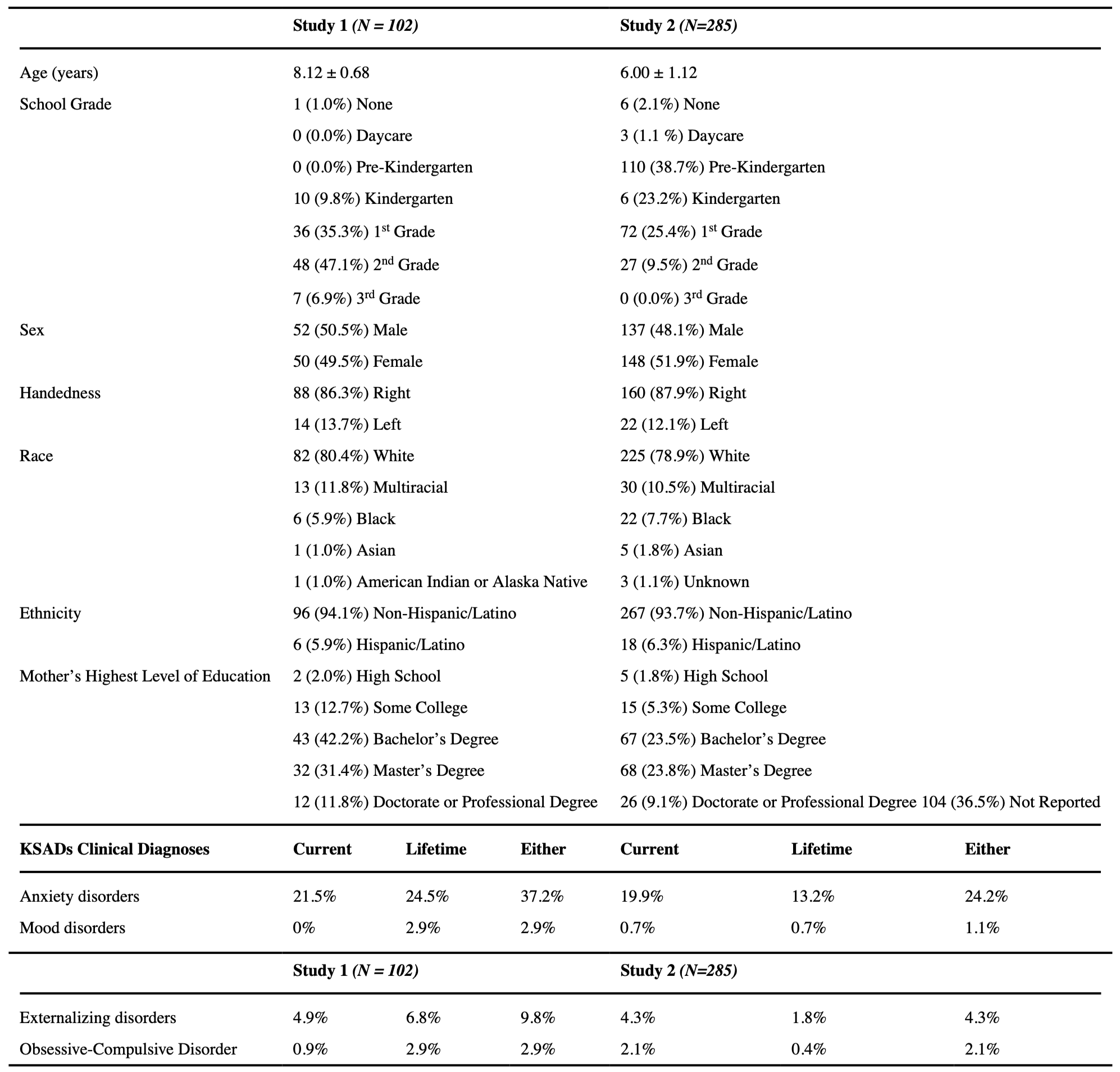
Table 1: Study 1 and Study 2 Child Participant demographics
Notes: KSADs = Kiddie Schedule for Affective Disorders and Schizophrenia; Anxiety disorders = separation, social, and generalized anxiety disorders, and specific phobia; Externalizing disorders = Attention deficit hyperactivity disorder, oppositional-defiant disorder, conduct disorder; Mood disorders = Major depressive disorder. No mania or hypomania in either sample.
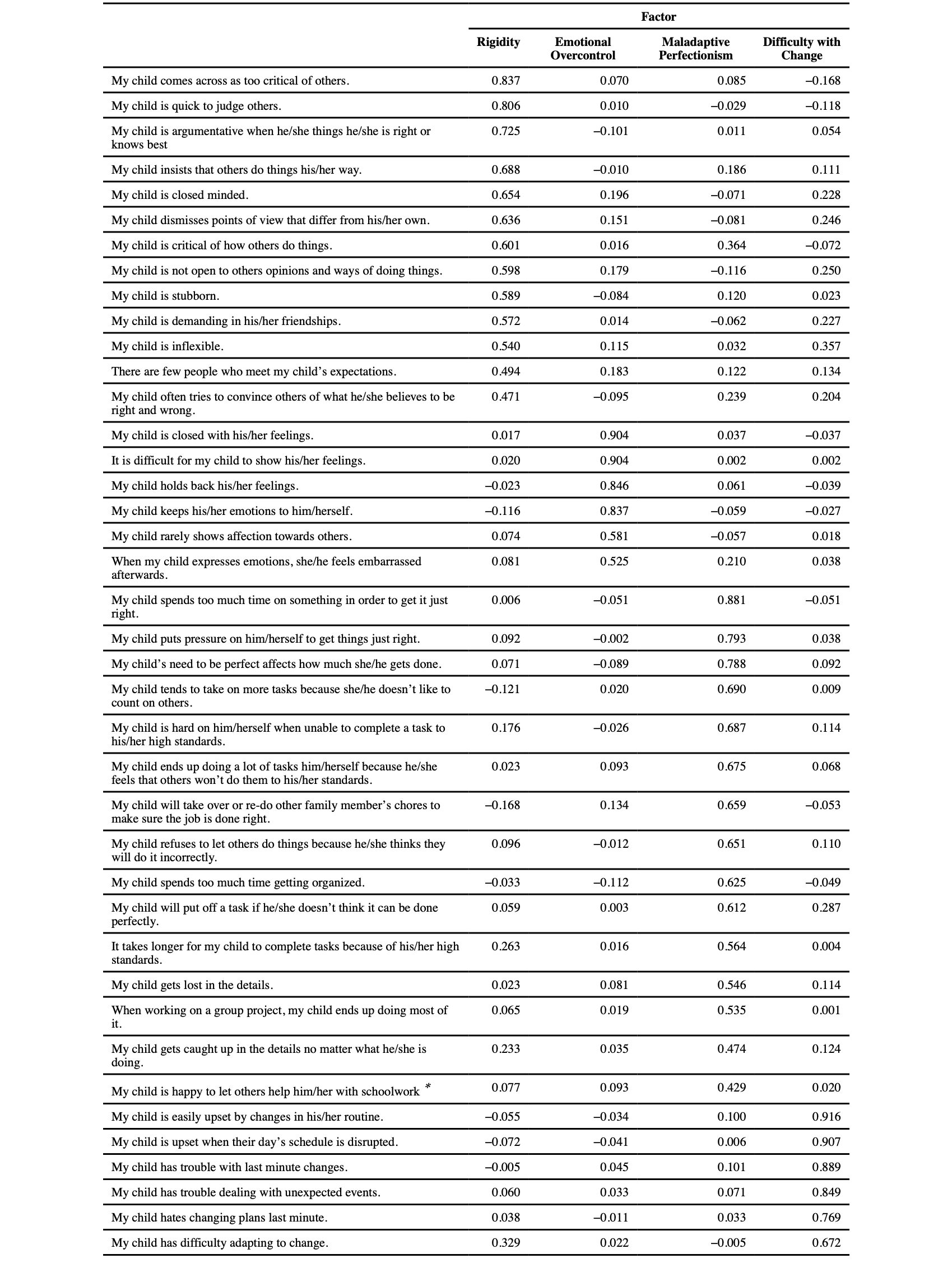
Table 2: Study 1 Pattern Matrix
* Reverse scored
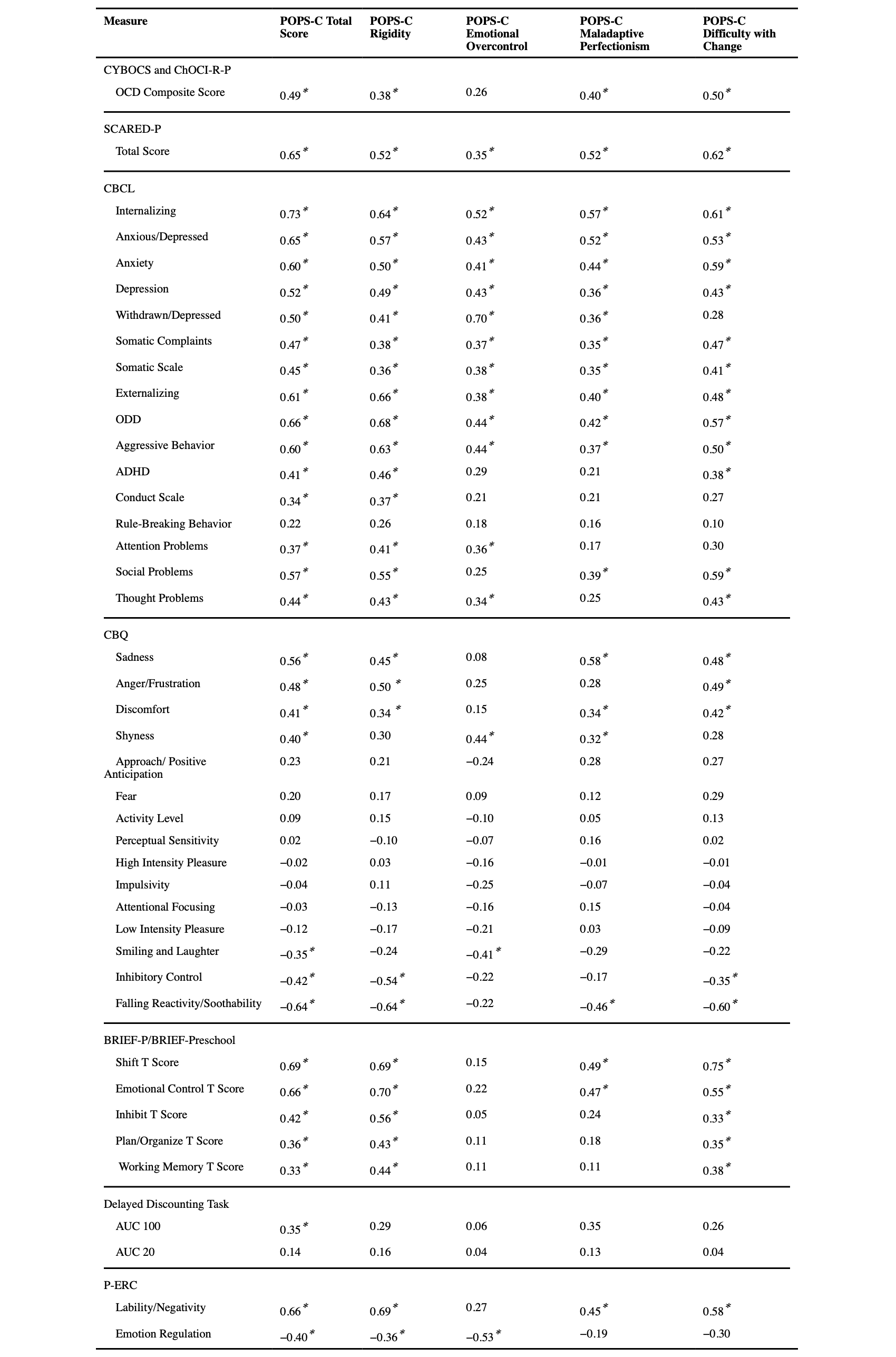
Table 3: Study 1 (N= 102) Correlations of POPS-C Total and Factors with Variables of Interest
Notes: Bonferroni correction applied to all;
* p<0.0012.
OCD= Obsessive-Compulsive Disorder. CYBOCS= Children’s Yale-Brown Obsessive-Compulsive Scale. ChOCI-R-P=Obsessional Compulsive Inventory-Revised Parent report. SCARED-P=Screen for Child Anxiety Related Emotional Disorders – Parent Report. CBCL= Child Behavior Checklist-Parent Report. CBQ= Children’s Behavior Questionnaire. BRIEF-P = Behavior Rating Inventory of Executive Function – Parent. BRIEF Preschool = Behavior Rating Inventory of Executive Function-Preschool. AUC= Area under the curve. P-ERC = Parent Report Emotion Regulation Checklist
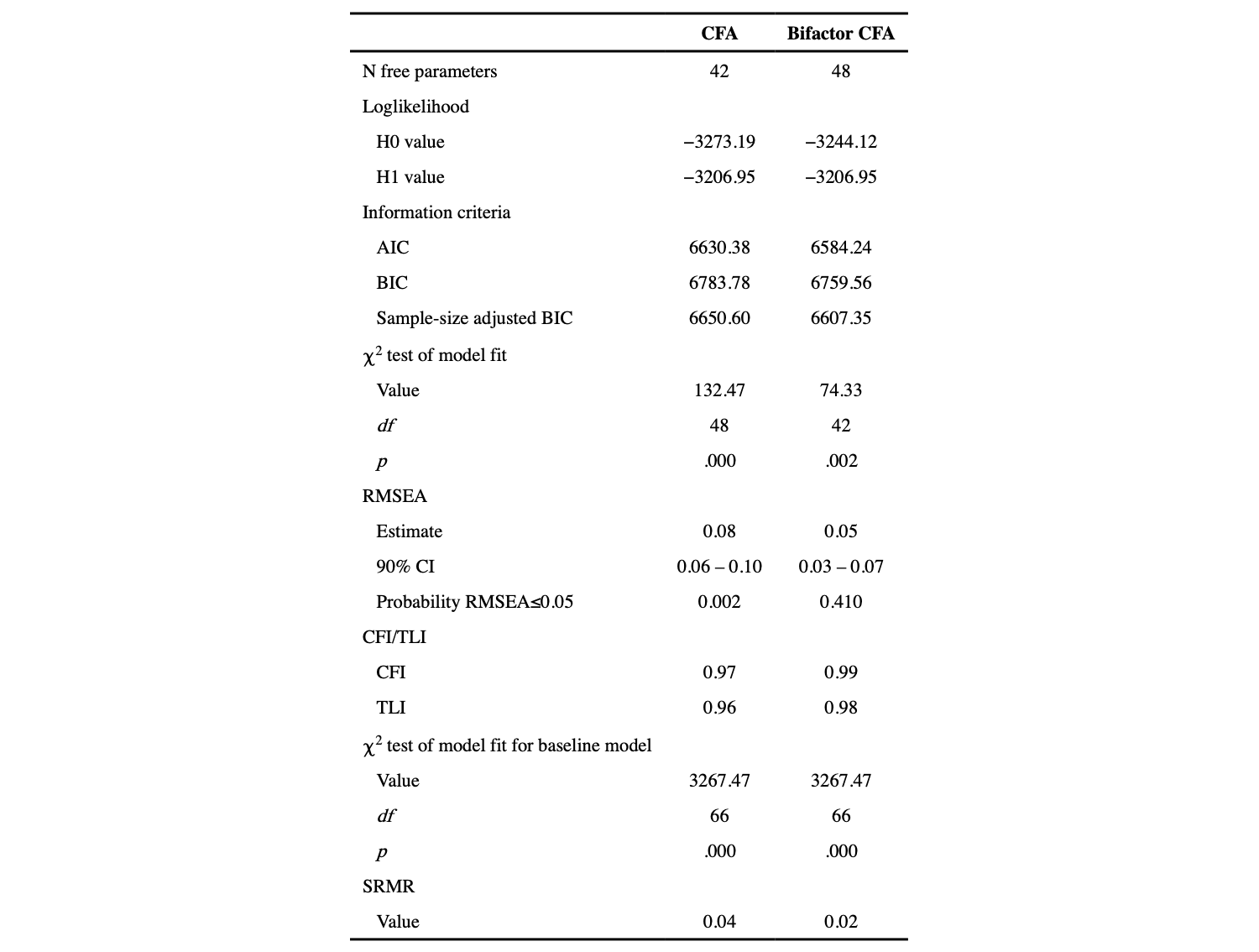
Table 4: Model Fit Statistics of CFA and Bifactor CFA with 4 Factors
Notes. AIC= Akaike Information Criterion. BIC= Bayesian Information Criterion. Fit guidelines: RMSEA (Root Mean Square Error of Approximation): ≤0.05 = excellent fit, 0.05–0.08 = acceptable fit, 0.08–0.10 = marginal fit, >0.10 = poor fit; CFI (Comparative Fit Index)/TLI (Tucker-Lewis Index): ≥0.95 = excellent fit, ≥0.90 = good/acceptable fit; SRMR (Standardized Root Mean Squared Residual): <0.08 = good fit.
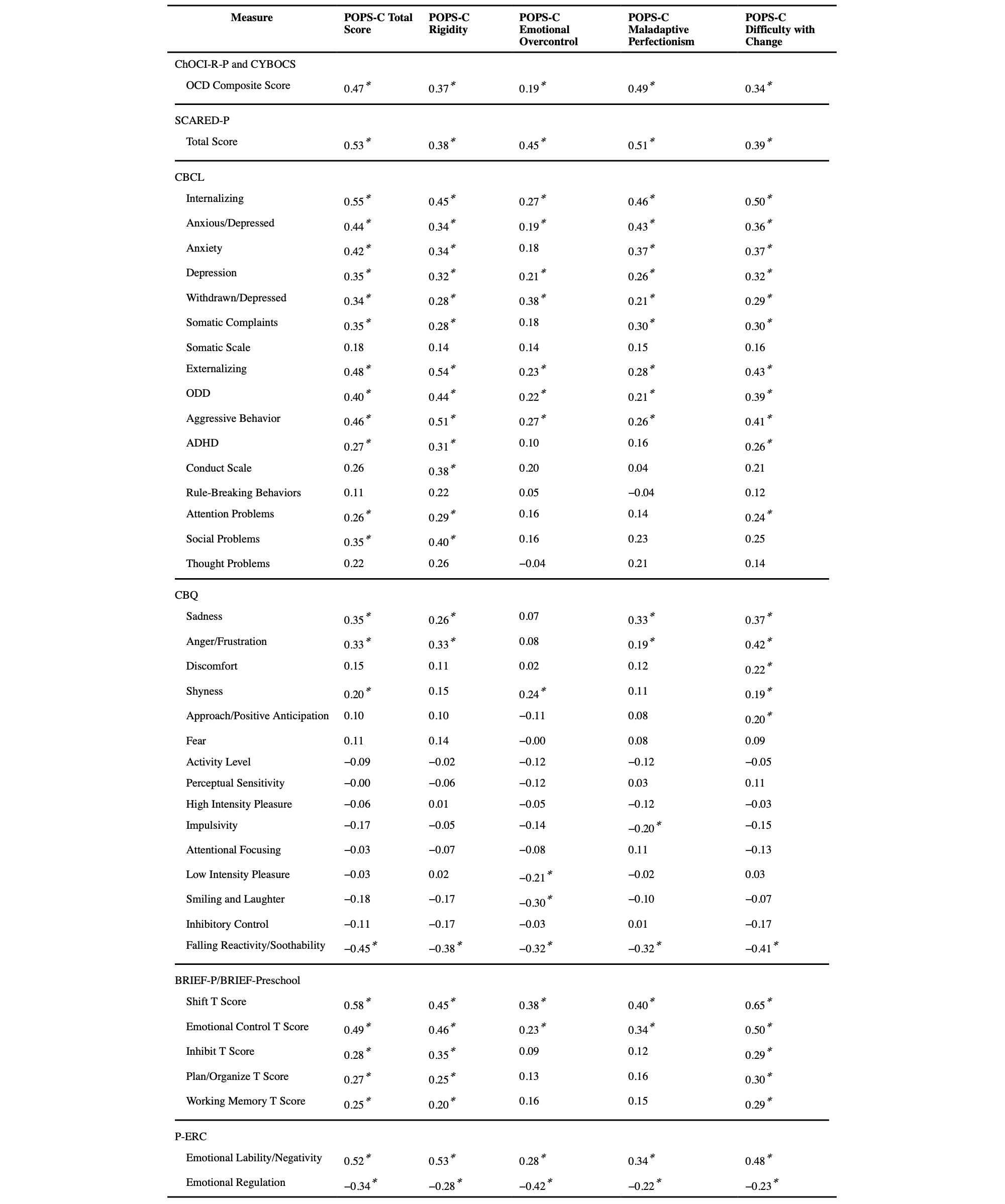
Table 5: Study 2 (N=285) Correlations of POPS-C Total and Factors with Variables of Interest
Notes. Bonferroni correction applied to all;
* p<0.0012.
OCD= Obsessive-Compulsive Disorder. CYBOCS= Children’s Yale-Brown Obsessive-Compulsive Scale. ChOCI-R-P=Obsessional Compulsive Inventory-Revised Parent report. SCARED-P=Screen for Child Anxiety Related Emotional Disorders – Parent Report. CBCL= Child Behavior Checklist-Parent Report. CBQ= Children’s Behavior Questionnaire. BRIEF-P = Behavior Rating Inventory of Executive Function – Parent. BRIEF-Preschool = Behavior Rating Inventory of Executive Function – Preschool. P-ERC = Parent Report Emotion Regulation Checklist.
References available in original article on PubMed.
